by Joy Maitland | Mar 30, 2025 | CEO, CFO, COO, CIO, News & Articles
Self-aware Leadership Development
Leadership, as someone once wrote, is “one of the most observed and least understood phenomena on earth.” That line has stood the test of time—and for good reason. For all our progress, self-aware leadership development remains a complex challenge. We often recognise great leadership when we see it, but struggle to define it or replicate it with certainty.
In business, discussions around leadership usually orbit three familiar themes:
- How leaders think, act, and influence
- How people respond to leadership and engage with it
- The systems and environments in which leadership takes shape
Of these, it’s the leader themselves who still attracts the most attention. We’re fascinated by personality, presence, and the seemingly unteachable “it” factor. The old debate lingers: are great leaders born, or can they be developed?
Figures like Field Marshal Montgomery believed leaders needed “infectious optimism” and visible resolve, even in moments of doubt. Henri Fayol saw leadership as careful planning and execution. David Ogilvy celebrated the complicated character—someone confident, never petty, and not shaken by defeat. These views, though dated, still echo in how we think about leadership today.
But let’s be honest: leadership in the modern world looks very different.
The Shift: From the Heroic to the Human
In today’s organisations, leadership isn’t about being the loudest or most dominant voice in the room. It’s about presence, perspective, and adaptability. Leadership is no longer a role reserved for the chosen few—it’s a practice that can be shaped, refined, and strengthened over time.
This is exactly the thinking behind Lumina Leader, a powerful psychometric tool created by Dr Stewart Desson, a business psychologist and founder of Lumina Learning. Unlike older models that place people into rigid categories, Lumina Leader embraces complexity. It explores how personality influences leadership behaviour—and how those behaviours shift in everyday settings, under pressure, and at our best.
At inemmo, we use Lumina Leader to help leaders discover their natural style, their leadership strengths, and where they may overextend, especially under stress. It supports self-awareness in a structured, evidence-based way—making the invisible aspects of leadership visible and actionable.
Structure Still Matters
Of course, leadership isn’t only about personality. Some of the most effective leaders in history—like Alfred P. Sloan at General Motors—succeeded because they understood systems. They built solid structures and equipped others to thrive within them. In contrast, individuals with star power but little strategic depth often struggle to sustain success.
The best leaders today combine both: an understanding of themselves and the ability to shape systems around them. They know when to step forward, when to step back, and how to align people around shared goals.
Leadership vs. Management: A False Divide?
Abraham Zaleznik, writing in Harvard Business Review, famously argued that leaders and managers are fundamentally different creatures. Managers seek stability. Leaders seek movement. But in today’s world, that binary feels dated. The most effective leaders draw from both disciplines—balancing strategic clarity with empathy, structure with creativity.
Warren Bennis, one of the great thinkers on leadership, found that successful leaders consistently pay attention to what matters, define direction, and bring people along with them. It’s less about certainty and more about alignment.
So, What Now?
Leadership is evolving. It’s becoming more inclusive, more psychologically aware, and more context-driven. Tools like Lumina Leader are part of this evolution—helping leaders move beyond vague ideals and towards real understanding.
In practice, this means:
- Knowing your natural strengths and how others perceive them
- Recognising how you behave under stress—and where it may trip you up
- Learning how to stretch your style to meet the needs of different situations and people
Above all, it means understanding that leadership isn’t a fixed trait or a job title. It’s a living, breathing process—something shaped by reflection, experience, and honest feedback.
So, the next time we talk about leadership, maybe we should look beyond the myths and focus on the mindset. The truth is, leadership isn’t about being perfect. It’s about being real, being aware, and being ready to grow.
The Right Conversation Can Change Everything. Let’s Talk.

by Joy Maitland | Mar 2, 2025 | Board Trustees, CEO, CFO, COO, CIO, Managing Directors, News & Articles
Brand loyalty is more than just repeat purchases—it’s a powerful driver of business resilience and long-term growth. A prime example is the automotive industry. General Motors (GM) recently secured the S&P Global Mobility Award for Overall Loyalty for the tenth consecutive year, proving that a well-established reputation and a consistent customer experience can make all the difference.
Why Brand Loyalty Matters for Business Leaders
For business leaders, loyalty isn’t just a marketing buzzword—it’s a strategic asset. Companies that build strong relationships with their customers gain distinct advantages:
- Stability in Uncertain Times
When economic conditions shift or competition heats up, a loyal customer base provides a buffer. Customers who connect with a brand on a deeper level are less likely to be swayed by short-term price changes or alternative options.
- Lower Costs, Higher Returns
Winning over new customers is expensive. Keeping existing ones is far more cost-effective and leads to higher lifetime value. A strong customer base reduces reliance on costly acquisition campaigns and drives steady revenue.
- Reputation and Influence
Satisfied customers become your best marketing tool. They spread the word, leave positive reviews, and recommend your brand to others—helping you expand your reach without additional investment.
GM vs Tesla: A Study in Contrasts
GM’s commitment to quality and innovation has earned it long-standing customer trust. The company’s U.S. electric vehicle (EV) market share climbed to 12% in late 2024, doubling from the previous year. Consumers are responding to GM’s expanding EV range, offering more choice and accessibility. More importantly, GM understands that loyalty isn’t just about selling cars—it’s about building an ecosystem that keeps customers returning, from service plans to seamless integration with new technologies.
Tesla, on the other hand, is learning the hard way that brand prestige alone doesn’t guarantee continued devotion. European sales plummeted by nearly 50% in early 2025, leading to an 8% drop in stock value. The electric vehicle market is becoming more competitive, and Tesla faces increasing pressure from Chinese manufacturers such as BYD and XPeng, who offer high-tech alternatives at competitive prices. On top of that, uncertainties around government incentives and Tesla’s own pricing strategy have led some once-loyal customers to explore other options.
The contrast is clear: GM has successfully evolved its brand to keep customers engaged, while Tesla is struggling to adapt to shifting market conditions. Even the most innovative companies must actively nurture customer relationships to maintain loyalty.
How to Build Lasting Loyalty
To keep customers engaged and committed, businesses need to focus on three key areas:
- Consistency is King
Customers stick with brands they trust. Delivering reliable quality, service, and experiences is non-negotiable.
- Meaningful Engagement
Loyalty doesn’t stop after a sale. Strong after-sales support, personal touches, and ongoing communication keep customers invested.
- Authenticity Wins
Customers can spot insincerity a mile away. Transparency, ethical practices, and a genuine commitment to customer needs build lasting trust.
Loyalty: The Ultimate Competitive Edge
In an unpredictable world, brand loyalty is what separates businesses that thrive from those that struggle to stay relevant. Companies that prioritise customer relationships alongside innovation and operational excellence will always have the upper hand.
Tesla is facing a wake-up call—will it adjust course and reconnect with its customers, or will loyalty continue to erode? And in your business, are you doing enough to ensure customers stay with you, even when new competitors enter the market?
How is your organisation strengthening its brand loyalty strategy?
The Right Conversation Can Change Everything. Let’s Talk.

by Atiya Sheikh | Mar 2, 2025 | Board Members, CEO, CFO, COO, CIO, Heads of Divisions, Managing Directors, News & Articles
Boeing was once a leader in aerospace innovation, symbolising excellence in engineering and manufacturing. Today, it faces a crisis driven by leadership decisions, corporate strategy, and technical failures. The company’s struggles serve as a warning to senior executives across industries—short-term decision-making and an excessive focus on financial metrics can weaken a company’s core strengths, with lasting consequences.
The Risks of Prioritising Shareholder Value Over Long-Term Stability
One of Boeing’s biggest mistakes was prioritising shareholder value over its core operations. The company spent an estimated $68 billion on share buybacks between 2010 and 2024. While these decisions pleased investors in the short term, they weakened Boeing’s ability to invest in research, quality control, and supplier relationships.
Instead of focusing on innovation and product excellence, Boeing’s leadership prioritised financial engineering. The consequences have been severe: supply chain failures, declining safety standards, reputational damage, and financial losses.
The lesson is clear: financial success should result from strong leadership, not be the sole focus of corporate strategy. Companies that chase short-term stock market gains at the expense of sustainable growth put their foundations at risk.
The Consequences of Outsourcing and Disengaged Leadership
Boeing’s reliance on outsourcing and offshoring aimed to streamline operations and reduce costs. In reality, it created a fragmented supply chain with serious quality control issues.
The 787 Dreamliner illustrates this problem. Boeing designed it with a highly outsourced production model, sourcing 30% of components from outside the US, compared to just 5% for the 747. Management assumed external suppliers would uphold Boeing’s engineering standards. Instead, a lack of direct oversight led to production delays, technical flaws, and costly redesigns.
Many industries have followed a similar path, prioritising cost-cutting over quality and control. The lesson for senior leaders? A company should never outsource its core competencies. While strategic partnerships and global supply chains have benefits, they must be carefully managed to maintain operational integrity.
Leadership and Its Impact on Organisational Culture
Boeing’s cultural shift stems from two major decisions:
- The 1997 Merger with McDonnell Douglas – This merger introduced a more aggressive, Wall Street-driven mindset. The company moved away from its legacy of engineering excellence and safety. Many analysts link this cultural shift to Boeing’s current struggles.
- The 2001 Relocation of Boeing’s Headquarters – Moving the headquarters from Seattle to Chicago distanced executives from frontline operations. This physical and cultural separation weakened leadership’s connection with engineers and production teams.
These decisions highlight an important lesson: leadership shapes corporate culture, and executives must remain engaged with core operations. The most successful organisations ensure that senior leaders stay closely connected to their people, processes, and products.
Lessons for Today’s Business Leaders
Boeing’s challenges are not unique to the aerospace sector. Industries such as technology, finance, healthcare, and manufacturing face similar pressures to cut costs, improve efficiency, and satisfy investors. However, as Boeing’s experience shows, prioritising efficiency over strategic investment can create long-term instability.
Key takeaways for executives and senior managers:
- Sustainable success requires long-term vision – Short-term financial gains should never compromise operational excellence and innovation.
- Outsourcing must be measured, not excessive – While external partnerships can improve efficiency, businesses must retain control over their most essential processes.
- Leadership must stay connected to the core business – Disengaged executives risk losing sight of the organisation’s purpose and values.
- Culture is a vital asset – A strong, mission-driven culture enhances resilience during crises.
A Path to Recovery?
Boeing’s new CEO, Kelly Ortberg, appears to recognise the need for change. His decision to base himself in Seattle rather than the company’s Arlington, Virginia, headquarters signals a return to hands-on leadership. His approach—prioritising safety, quality, and direct engagement—could help restore Boeing’s credibility.
For leaders across industries, Boeing’s story is a reminder that business success is not just about financial performance. It is about building a company that can stand the test of time.
How is your organisation balancing financial priorities with long-term sustainability?
The Right Conversation Can Change Everything. Let’s Talk.

by Atiya Sheikh | Mar 2, 2025 | Board Members, CEO, CFO, COO, CIO, News & Articles, Senior Managers, Women Leaders
Modern business thrives on rapid digital transformation, where data is more than just numbers—it is the foundation of innovation and operational success. Without trust in data, even the most advanced AI systems can mislead organisations, causing financial losses and damaging reputations. Recent research highlights this risk: a 2024 Gartner study estimated that poor data quality drains 20–35% of operating revenue, while a Forrester report found that businesses lose 22% of revenue due to data inaccuracies. As generative AI (Gen AI) reshapes industries, organisations must strengthen data trust to harness its full potential.
Data as a Strategic Asset
Reliable data enables leaders to make smarter decisions and drive innovation. However, inaccurate or inconsistent data can lead to costly mistakes, such as incorrect pricing, flawed stock forecasts, or misallocated revenue. These errors can result in substantial financial losses and reputational harm. A McKinsey survey found that 65% of organisations now use Gen AI to enhance decision-making, nearly doubling its adoption in just one year.
Businesses must establish sound data governance to mitigate risks. This requires more than deploying advanced technology; it involves nurturing a data-driven culture and investing in staff training. By standardising data management practices and implementing strong security measures, organisations can transform raw data into a strategic advantage.
Unlocking Efficiency and Innovation with AI
AI integration is already reshaping industries. In customer call centres, Gen AI has reduced transaction times by up to 80% while increasing customer satisfaction by 20%. In aerospace, defence, manufacturing, and automotive sectors, AI-powered 3D modelling accelerates product design and production. Meanwhile, digital twins revolutionise supply chain management.
A global Statista report found that 57% of organisations expect AI to drive efficiency and innovation. By leveraging AI and automation, companies optimise processes and unlock new opportunities. These range from personalised customer experiences to enhanced ESG (Environmental, Social, and Governance) reporting, which supports sustainable growth.
Building and Maintaining Data Trust
To fully capitalise on AI, organisations must first assess their data quality. Identifying gaps and creating a clear improvement strategy are essential steps. A strong governance model should define roles, responsibilities, and processes that safeguard data integrity. Studies show that companies with robust data governance are 40% more likely to outperform competitors.
Upskilling employees is equally important. As AI-driven operations expand, collaboration between data teams and business units ensures data remains accurate, consistent, and secure.
Regulation, Ethics, and Responsible Data Use
Once data trust is established, maintaining it requires strict attention to regulation and ethics. AI technologies now detect anomalies, reduce manual errors, and predict trends, automating data quality checks. However, ethical considerations remain essential. Organisations must implement safeguards against biases in AI algorithms, ensuring transparency in data use and accountability in AI-driven decisions. Understanding a dataset’s origin—its lineage—reinforces transparency and responsible usage, ultimately strengthening trust.
Looking Ahead: A Data-Driven Future in 2025 and Beyond
As Gen AI continues expanding, its influence will grow stronger. The UK government’s AI Opportunities Action Plan, introduced in January, highlights data’s role in creating jobs, driving innovation, and increasing productivity. With global AI investments rising, the strategic value of data integrity becomes even clearer.
In 2025, businesses that enhance data trust will lead successful AI adoption and improve performance. Organisations that prioritise secure, accurate, and transparent data will protect their operations while unlocking new opportunities for growth and innovation.
There is no substitute for data you can trust. How is your organisation ensuring data integrity in an AI-driven world? By investing in strong governance, ethical AI practices, and continuous upskilling, businesses can turn data challenges into competitive advantages in an increasingly digital world.
The Right Conversation Can Change Everything. Let’s Talk.

by Joy Maitland | Mar 1, 2025 | Board Members, Board Trustees, CEO, CFO, COO, CIO, Heads of Divisions, Managing Directors, News & Articles, Non-Executive Board Members, Senior Managers
Bold ideas and visionary leaders may capture headlines, but real organisational transformation emerges from the intricate web of new and evolving relationships.
Embracing Complexity: A Smarter Approach to Business Transformation
Transformation is often framed as a bold vision driven by senior leadership, executed through structured plans. Yet in today’s volatile business environment, this approach falls short. Real change does not come from rigid strategies but from the interplay of relationships, systems, and emerging opportunities. Leaders who embrace complexity rather than resist it will unlock new levels of agility, adaptability, and innovation.
The Flaw in Traditional Transformation Thinking
Many leaders assume transformation is best achieved through top-down control—a defined roadmap with clear milestones. While structure has its place, this approach underestimates the reality of complex organisations: change is non-linear, unpredictable, and shaped by countless interactions across teams, departments, and stakeholders.
Relying solely on executive directives often leads to missed opportunities and resistance. Employees on the front lines understand operational challenges and customer needs in ways that leadership alone cannot. When transformation efforts engage diverse perspectives and allow adaptive decision-making, organisations become more resilient and responsive.
Why Complexity is an Advantage
Businesses today operate in interconnected systems—supply chains, markets, and workforces that evolve continuously. Attempting to control every variable is futile. Instead, leaders should focus on enabling conditions where change can emerge organically.
A company that integrates feedback loops, cross-functional collaboration, and iterative learning creates agility at all levels. This allows teams to pivot when faced with unexpected challenges rather than being constrained by rigid plans. Complexity is not a barrier; it is a source of strength for organisations that build adaptability into their culture.
Leadership: From Control to Enabling Change
Effective leaders in complex environments shift from directing to empowering. Instead of imposing a fixed agenda, they:
- Set a clear vision, but allow flexibility in execution
- Encourage open collaboration across functions to surface innovative solutions
- Support a culture of learning, where feedback informs strategy
- Break down silos, ensuring that transformation is a shared responsibility
This leadership approach does not mean stepping back—it means creating the right conditions for transformation to thrive.
Building Agility Into Strategy
Rigid, one-size-fits-all strategies no longer work in dynamic environments. Instead, organisations should:
- Treat plans as adaptable frameworks, not static roadmaps
- Test and iterate—small-scale pilots can uncover unexpected insights
- Balance structure with flexibility, allowing teams to adjust based on real-time challenges
Business transformation is not a single event—it is a continuous process shaped by relationships, learning, and adaptability. Leaders who recognise the power of complexity will build organisations that not only survive change but thrive because of it. The challenge is not to eliminate complexity but to harness it.
Is your organisation structured for control—or for adaptability?
The Right Conversation Can Change Everything. Let’s Talk.

by Joy Maitland | Feb 10, 2025 | Board Members, Board Trustees, CEO, CFO, COO, CIO, Heads of Divisions, Leadership Development, Managing Directors, News & Articles, Non-Executive Board Members, Senior Managers
In a world where technology is advancing rapidly, leaders must decide: Will they lead or follow? Artificial intelligence (AI) is reshaping industries and competition. The latest investments by tech giants show the need for businesses to embrace innovation. But innovation is not just for executives or research teams. It can come from anyone in an organisation.
The AI Investment Race: A Lesson in Leadership
Amazon is the latest company to reaffirm its commitment to AI. CEO Andy Jassy announced that Amazon’s £26.3 billion capital expenditure last quarter is a good estimate for 2025. Most of that funding will go towards AI infrastructure for Amazon Web Services (AWS). Jassy believes AI will transform applications, making it as fundamental as computing, storage, and databases.
Amazon is not alone. Microsoft plans to invest £80 billion in AI data centres in 2025. Meta will spend up to £65 billion, mainly on AI research and development. Alphabet, Google’s parent company, will invest £75 billion, exceeding expectations. OpenAI has also outlined a £500 billion infrastructure project to push AI forward.
Challenging the Norm: Innovation from Unexpected Places
Despite these massive investments, recent events show that leadership in AI is not just about spending large sums. A Chinese startup, DeepSeek, recently claimed to have developed a competitive AI model for just £5.6 million. While some industry leaders question this, it highlights an important fact: innovation is not limited to tech giants. Smaller, agile organisations can challenge the status quo and think differently.
This is a reminder for business leaders in all sectors. The next big breakthrough could come from a mid-level manager spotting an opportunity. It could be a frontline employee identifying inefficiencies. It could be a team rethinking old ways of working. Companies that create an environment where employees at all levels can contribute ideas will be the ones that lead.
What Does This Mean for Your Business?
The AI revolution is not just for Silicon Valley. It is a strategic priority for businesses everywhere. The real question is not whether to invest in AI, but how to use it effectively. More than financial commitment, it requires strong leadership, openness to ideas, and a readiness to embrace change.
Leaders should consider:
- Do we encourage employees to contribute innovative ideas?
- Are we agile enough to adapt to new opportunities?
- Are we actively exploring AI applications in our industry?
- Are we willing to challenge old ways of doing business?
Final Thoughts: Lead, Don’t Follow
History shows that leaders in innovation are not always those with the biggest budgets. They are the ones with the boldest vision. While Amazon, Microsoft, Meta, and Google are investing heavily, real game-changers may come from unexpected places. Leadership is about setting trends, not following them.
At Inemmo, we work with middle to senior leaders worldwide, helping them navigate change. Whether in technology, finance, healthcare, or another field, the key question remains: Are you leading the way, or waiting for others? The future belongs to those willing to innovate. Will that be you?
The Right Conversation Can Change Everything. Let’s Talk.
Sources

by Joy Maitland | Jun 8, 2023 | Leadership Development
Mindfulness is sometimes dismissed in business circles as New Age fluff – yet it has a powerful knack for refocusing employees and helping them boost their performance
It’s no exaggeration to say that workplaces often feel like the working definition of chaos. Even when it isn’t necessarily the case that chaos is underway, the busiest phases routinely make us think that it is. The abundance of work that we need to get through during those times is often expressed in our physical actions. Gestures and tics become showier; struts down office corridors or around workstations grow more urgent and emphatic; typing gets aggressively louder – and voices climb in pitch. Those are the symptoms of organisations in full flow, and many workers find them unsettling. Could mindfulness be the cure?
(more…)
by Joy Maitland | Aug 18, 2022 | Awards, Leadership Development
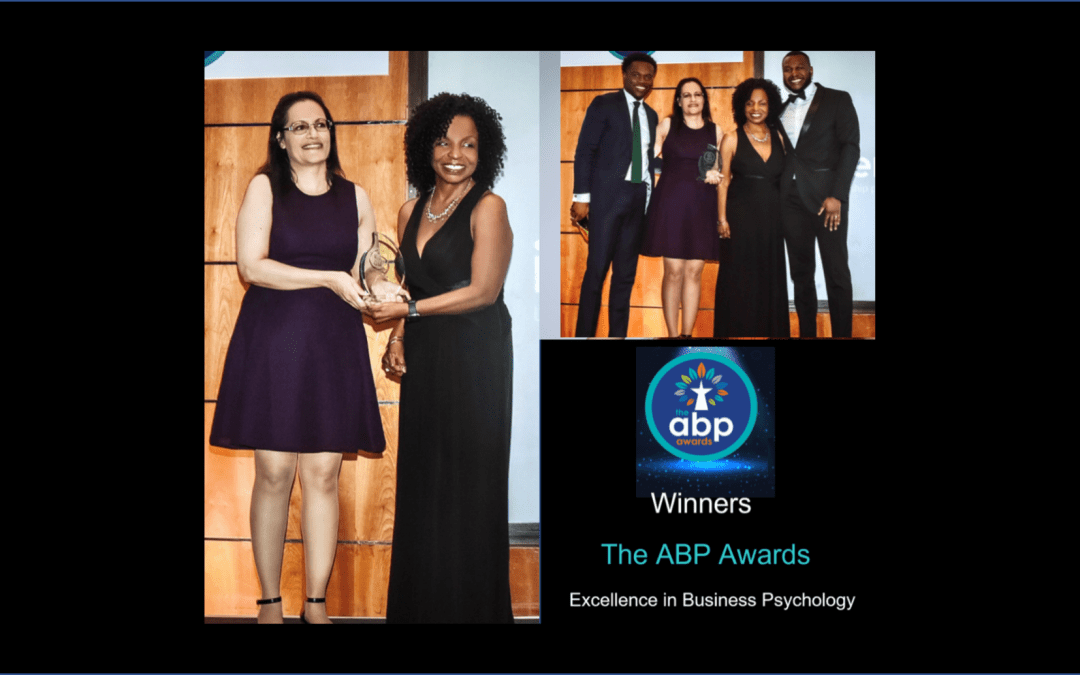
INEMMO wins ABP Award for ‘Excellence in Using Business Psychology for Social Impact’

The ABP Award
Inemmo received an award at the prestigious Association for Business Psychology annual awards ceremony in the ‘Excellence in Using Business Psychology for Social Impact’ category. Additionally, Inemmo was a finalist in three categories: Excellence in Development Interventions, Excellence in Embracing Diversity, and Excellence in Using Business Psychology for Social Impact.
The Levelling-Up Interviews
Atiya Sheikh and Joy Maitland recently met with individuals they have coached through their ‘Levelling-Up’ coaching and mentoring program. They discussed how these coachees successfully tackled social inequalities and biases in their careers, focusing on five key aspects.
- Parental Influence
- Cultural Identity
- Influence of Teachers
- Workplace Environment
- Coaching and Mentoring
About the inemmo ‘Levelling-Up’ Programme
Inemmo’s ‘Levelling-Up’ coaching programme is a resounding success, offering crucial support to young individuals facing various forms of inequality and discrimination.
Starting with weekly sessions, the programme gradually adapts to the mentee’s growing confidence, tailoring interventions based on ongoing assessments. Remarkably, this valuable program is entirely cost-free for these young individuals.
The impact is profound. It nurtures their resilience, boosts self-understanding, refines emotional intelligence, encourages self-direction, responsibility, and drives career advancement. Since its launch in 2015, the programme has witnessed significant growth.
Joy Maitland and Atiya Sheikh, the visionary directors of Inemmo, are wholeheartedly committed to connecting with individuals at their current stage and helping them achieve their desired objectives.